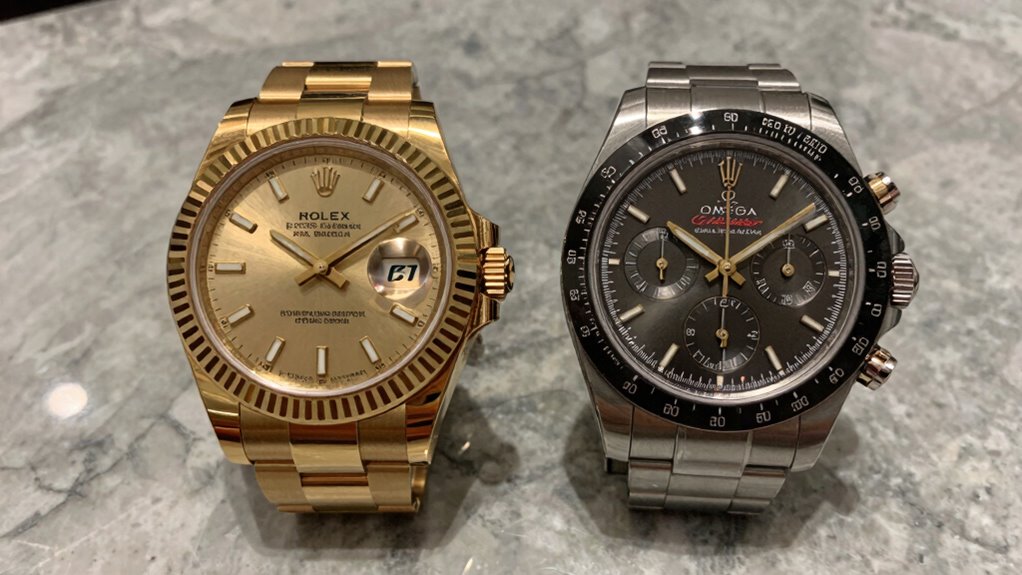

In the Rolex vs. Omega rivalry, your choice depends on what you value most. Rolex leads in prestige, exclusivity, and resale value, making it ideal if you want a symbol of status and long-term investment. Omega, however, shines with innovative technology and rich heritage, appealing to those who appreciate craftsmanship and history. Ultimately, both brands excel, but exploring their unique strengths can help you decide which aligns best with your style and goals.
Key Takeaways
- Rolex dominates the luxury market with higher prestige, exclusivity, and resale value, often making it the preferred choice for status.
- Omega offers advanced technological innovations like co-axial escapements and greater accessibility at lower price points.
- Rolex’s limited supply and long waitlists create resale premiums, while Omega’s broader availability reduces secondary market premiums.
- Both brands excel in craftsmanship, but Rolex emphasizes durability and timeless design, whereas Omega highlights innovation and heritage.
- The “better” brand depends on buyer priorities: status and investment (Rolex) versus technology and accessibility (Omega).
Market Position and Brand Prestige
Rolex dominates the luxury watch market, establishing itself as the benchmark for prestige and reliability. With an estimated global sales of around USD $11 billion and a market share of about 32%, it’s the clear leader. Its brand is synonymous with success, durability, and exclusivity, partly driven by long waitlists for popular steel sports models. Rolex’s focus on in-house movements, timeless design, and consistent quality reinforces its position as a status symbol. Omega, by comparison, holds a smaller share—around 7%—but is recognized for technological innovation and heritage. While Omega offers strong value and accessible luxury, Rolex’s market dominance and perception as an investment make it the ultimate symbol of prestige in the high-end watch world. Color accuracy in watch manufacturing also plays a role in brand differentiation and customer satisfaction.
Heritage, Iconic Models, and Cultural Impact

Heritage and iconic models shape the identities of both Rolex and Omega, fueling their cultural resonance beyond mere luxury. Rolex’s Submariner, Daytona, and Datejust symbolize timeless design and durability, linking the brand to exploration, sports, and prestige. Omega’s Speedmaster, Seamaster, and Constellation highlight space exploration, diving, and technological innovation, strengthening its storytelling power. Rolex’s association with explorers and racecar drivers elevates its status as a symbol of achievement and resilience. Omega’s ties to the Moon landing and James Bond movies embed its models deep into pop culture. Additionally, free floating design elements contribute to their versatility and enduring appeal. These stories and models create emotional connections, making each brand more than just a watchmaker—each becomes a cultural icon that commands admiration and desire across generations.
Technological Innovations and Craftsmanship

Technological innovations are at the heart of what sets these luxury watchmakers apart, with each brand pushing the boundaries of precision and durability in different ways. Rolex focuses on in-house movements with the Chronergy escapement, achieving outstanding accuracy certified as Superlative Chronometer (+/- 2 seconds daily). Their emphasis on vertical integration ensures durability and ease of servicing. Omega, on the other hand, promotes the co-axial escapement and Master Chronometer certification, which guarantees high magnetic resistance and precision to METAS standards. They’ve pioneered anti-magnetic technology, resisting up to 15,000 gauss. Omega offers a wider variety of movements and complications, emphasizing visible technological milestones. Both brands excel in craftsmanship—Rolex with conservative, long-lasting engineering, and Omega with innovative breakthroughs that appeal to tech-savvy enthusiasts. European cloud innovation continues to drive advancements in precision and security across industries.
Pricing, Availability, and Secondary Market Dynamics

Pricing and availability substantially influence how these brands perform in the secondary market. Rolex’s watches typically command higher retail prices, with popular steel sports models often trading above retail due to long waitlists and limited supply. This scarcity drives significant resale premiums, sometimes doubling or tripling original prices, especially for sought-after references like the Daytona. Omega’s retail prices are generally lower, and its more accessible distribution channels mean less scarcity. While some limited editions, like the Snoopy Speedmaster, can fetch above retail, most Omega models see moderate resale values. The key difference lies in availability: Rolex’s tight allocation system and waitlists create a premium market environment, whereas Omega’s broader retail access results in less aggressive secondary-market premiums. AI tools can also influence the secondary market by providing collectors with more data to inform their purchasing decisions.
Buyer Profiles and Value Proposition Tradeoffs

Understanding the different buyer profiles for Rolex and Omega helps clarify their distinct value propositions and tradeoffs. If you seek status, resale value, and exclusivity, Rolex appeals to you. You’re willing to accept waitlists, pay premiums, and prioritize timeless designs with strong market recognition. Omega, on the other hand, attracts enthusiasts who value technological innovation, heritage, and broader affordability. You might appreciate Omega’s technical milestones, diverse models, and more accessible availability. The tradeoff lies in scarcity versus accessibility: Rolex offers prestige through limited supply and resale premiums, while Omega provides greater choice and proven technical credentials at lower prices. Whether you prioritize long-term investment or technical storytelling, your preferences will shape which brand better matches your lifestyle and aspirations. Additionally, considering market reputation and the brands’ histories can influence your decision-making process.
Frequently Asked Questions
How Do Rolex and Omega Compare in Terms of Long-Term Investment Value?
You’ll find Rolex generally offers better long-term investment value due to its strong market dominance, higher resale premiums, and brand prestige. Its scarcity, consistent demand, and iconic models help preserve value over time. Omega’s value can grow with limited editions and technological innovations, but it’s less predictable. If your goal is investment, Rolex’s proven track record and higher resale potential make it the safer choice for long-term gains.
Which Brand Offers Better After-Sales Service and Maintenance Options?
You’ll find that Rolex offers better after-sales service and maintenance options. Their extensive global service network guarantees quick, reliable repairs and regular maintenance, backed by high-quality parts and expert technicians. Rolex’s reputation for durability means you can expect longer intervals between services and strong resale value after maintenance. Omega also provides solid service options, but their network isn’t as widespread, and turnaround times can sometimes be longer, especially outside major markets.
How Sustainable Are the Brands’ Sourcing and Manufacturing Practices?
You’ll find both brands increasingly committed to sustainable practices, but Omega leads with a transparent supply chain and responsible sourcing, especially for materials like gold and diamonds. Rolex is making strides towards sustainability, investing in eco-friendly manufacturing and reducing environmental impact. While neither brand is perfect, Omega’s focus on ethical sourcing and eco-conscious manufacturing gives it a slight edge in long-term sustainability, aligning with growing consumer expectations for responsible luxury.
What Are the Key Differences in Their Global Retail and Distribution Networks?
You’ll find that Rolex’s retail and distribution network is highly exclusive, with authorized dealers carefully selected and waitlists common, creating scarcity and driving up premiums. Omega’s network is broader and more accessible, with more stores and less wait time, making their watches easier to buy. While Rolex emphasizes scarcity and prestige, Omega focuses on wider availability and steady global presence, appealing to different buyer preferences.
How Do Innovation and Technological Advancements Impact Each Brand’s Future Growth?
Innovation and technological advancements are vital for each brand’s future growth. You’ll find Omega pushing boundaries with features like co‑axial escapements and high magnetic resistance, appealing to tech enthusiasts. Rolex prioritizes in-house movements, durability, and subtle upgrades, maintaining its prestige. By continuously evolving their technologies, both brands attract new buyers and retain loyal collectors, ensuring they stay competitive and relevant in the luxury watch market.
Conclusion
In the battle of Rolex and Omega, you hold the keys to a world of timeless elegance and innovation. Each brand is a star in its own constellation, pulling at your desire for heritage or cutting-edge tech. Whether you’re chasing the legendary glow of a Rolex or the adventurous spirit of Omega, remember—your choice is your signature in the vast universe of luxury watches. Make it count, and let your wrist tell your story.