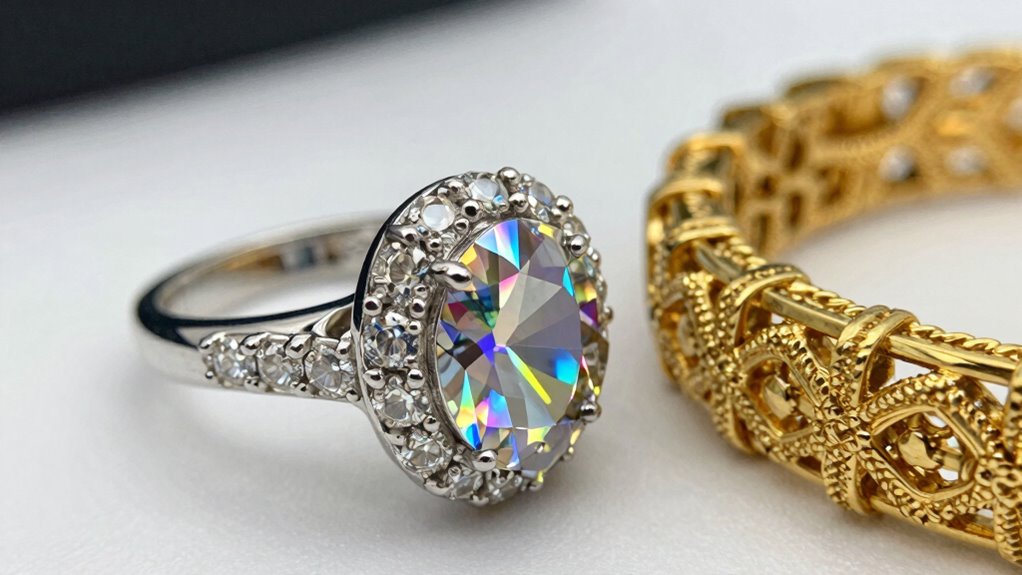

High-end jewelry commands astronomical prices because of the rare, high-quality materials like diamonds and gold, combined with expert craftsmanship and brand reputation. Diamonds symbolize love, power, and endurance, while gold’s durability and timeless appeal make it a favorite. Cultural traditions and symbolism also boost their value. Plus, limited editions and ethical sourcing add to their desirability. If you want to understand the true reasons behind their luxury status, keep exploring what makes these pieces so extraordinary.
Key Takeaways
- Diamonds and gold are rare, valuable materials that significantly enhance jewelry’s intrinsic worth and desirability.
- High craftsmanship and brand prestige add emotional and authentic value, justifying premium prices.
- Diamonds symbolize luxury, power, and romance, creating an exclusive allure that drives up market value.
- Ethical sourcing and sustainable practices appeal to modern consumers, adding value and exclusivity to high-end jewelry.
- Limited editions, provenance, and vintage pieces increase collectibility and investment potential, commanding higher prices.
The Market Value of High-End Jewelry
The market value of high-end jewelry is substantial and continues to grow rapidly. You’re part of a thriving industry expected to reach $578.45 billion by 2033, driven by increasing demand and luxury spending. The global jewelry market alone will hit nearly $349 billion in 2025, with the diamond sector accounting for $198.21 billion. In the U.S., the jewelry market is projected to grow to $97.62 billion by 2030, with high-end pieces commanding premium prices. Factors like cultural significance, investment appeal, and evolving consumer preferences contribute to this growth. As disposable incomes rise and tastes shift toward ethically sourced and unique jewelry, the market’s value will keep expanding. This trend highlights the importance and enduring appeal of high-end jewelry in the luxury market. Additionally, trends in Free Floating styles and designs influence consumer preferences and drive demand for exclusive pieces.
The Allure of Diamonds and Their Symbolism
Have you ever wondered why diamonds have long been the ultimate symbol of love and luxury? It’s because they embody rarity, durability, and beauty—all qualities that make them perfect representations of timeless commitment. Their brilliance and clarity captivate the eye, creating an aura of elegance and exclusivity. Historically, diamonds have been linked to power, status, and romance, often used in engagement rings to signify eternal love. Their symbolism goes beyond aesthetics: they represent strength, endurance, and the promise of a lasting bond. This emotional and cultural significance elevates their value, making them more than just jewelry—they’re symbols of achievement and devotion. Additionally, understanding statistical concepts involved in assessing diamond quality can further highlight the factors that contribute to their high prices. That allure, combined with their rarity, keeps diamonds at the pinnacle of high-end jewelry.
Gold’s Dominance in Luxury Jewelry

Diamonds often steal the spotlight when it comes to luxury jewelry, but beneath their brilliance lies a material that has long dominated high-end designs: gold. Its timeless appeal, durability, and malleability make it the preferred choice for exquisite pieces. Globally, gold accounts for 78% of precious metal jewelry sales, emphasizing its dominance. In the U.S., consumers spend an average of $240 annually on gold jewelry, reflecting its cultural importance and investment value. Gold’s versatility allows it to complement other gemstones and styles, maintaining its status as a symbol of wealth and prestige. Its enduring popularity is driven by tradition, financial security, and its intrinsic beauty, ensuring gold remains central to luxury jewelry collections worldwide. The materials used in jewelry also influence their value and desirability, with gold’s unique properties giving it a distinct edge over other precious metals.
Factors Driving the Price of Rare Gemstones
The price of rare gemstones depends heavily on their rarity and scarcity, making some stones much more valuable than others. You should also consider the quality and grading, as higher clarity, color, and cut considerably boost worth. Additionally, market demand trends, like shifts toward sustainable or unique stones, can quickly influence prices upward. Incorporating essential oil benefits into your understanding of gemstone valuation can provide insights into how natural qualities influence perceived value.
Rarity and Scarcity
Rarity and scarcity are key factors that drive up the prices of rare gemstones. When a gemstone is difficult to find or harvest, its value skyrockets. Limited deposits mean fewer stones are available for purchase, creating high demand among collectors and investors. For example, certain colored sapphires or emeralds come from specific regions with restricted sources, making each piece unique and highly sought after. Additionally, natural stones with rare hues or exceptional features are even more scarce, further elevating their worth. As supply diminishes relative to demand, prices climb sharply. You’ll notice that the rarer a gemstone, the more it’s prized, often becoming a symbol of exclusivity and prestige. This scarcity, combined with high demand, keeps prices consistently astronomical. Well‑sourced coverage ensures that these factors are accurately documented and understood by enthusiasts and collectors alike.
Quality and Grading
High-quality gemstones command higher prices because their grading reflects their overall excellence and desirability. When you evaluate a gemstone, experts assess various factors like cut, color, clarity, and carat weight—collectively known as the 4Cs. A top-grade stone features a precise cut that maximizes brilliance, a pure color without visible flaws, minimal inclusions, and an ideal size. Higher grades mean fewer imperfections and more vivid hues, making the gemstone more attractive and valuable. Grading reports from reputable laboratories provide transparency and help you compare stones objectively. The better a gemstone’s grade, the more it stands out in terms of quality and rarity, justifying its premium price. This meticulous grading process ensures you’re investing in a gemstone that truly exemplifies excellence.
Market Demand Trends
Market demand for rare gemstones is driven by a combination of consumer preferences, economic factors, and industry trends. You notice that younger buyers, especially Millennials and Gen Z, prioritize sustainability and ethically sourced stones, boosting demand for lab-grown and colored gemstones. Rising disposable incomes and fashion influences also increase interest in unique, personalized pieces, pushing prices higher. Regional shifts matter too: Asia-Pacific’s growing middle class and strong cultural traditions in jewelry consumption contribute considerably. Additionally, the expanding online market makes rare gemstones more accessible, fueling demand globally. As more consumers seek meaningful, ethical, and distinctive jewelry, the demand for rare gemstones continues to rise, directly impacting their prices and reinforcing their status as luxury investments. Furthermore, the increasing adoption of specialized equipment like high-end scrubbing and cleaning tools in jewelry care ensures these precious stones are maintained in optimal condition, supporting their value and appeal.
Cultural Influences and Traditional Preferences

Cultural influences and traditional preferences play a significant role in shaping high-end jewelry purchases worldwide. You’ll find that regional customs and history heavily impact material choices, designs, and symbolism. For example, in India, gold is favored for its cultural significance and investment value, while Western cultures often associate diamonds with engagement rings. These preferences influence market demand and pricing, making certain materials more desirable in specific regions. To illustrate, consider the following:
| Region | Traditional Preference |
|---|---|
| India | Gold for weddings and celebrations |
| Western countries | Diamonds symbolize love and commitment |
| China | Jade and gold for good luck and prosperity |
| Middle East | Gold and intricate designs for status |
Understanding these cultural nuances helps explain why certain jewelry pieces command higher prices globally. Additionally, the choice of jewelry materials can reflect cultural identity and social status, further driving demand and pricing variations.
The Role of Craftsmanship and Brand Prestige
You recognize that high-end jewelry isn’t just about the materials; it’s about the craftsmanship that transforms each piece into art. Brand legacy adds value, reflecting decades of heritage and trust that buyers seek. Together, craftsmanship and brand prestige justify the premium prices of luxury jewelry. Additionally, financial knowledge can help consumers understand the true value behind these investments.
Heritage and Artistry
Heritage and artistry play a crucial role in high-end jewelry, as craftsmanship and brand prestige often determine a piece’s value and desirability. You can see this in how iconic brands like Cartier or Tiffany carry a legacy that elevates their jewelry beyond mere adornment. Consider these key aspects:
- Craftsmanship: Master jewelers spend years perfecting techniques, ensuring every detail reflects exceptional skill and precision.
- Heritage: A brand’s history of innovation and tradition adds emotional value and authenticity to each piece.
- Artistry: Unique designs and intricate craftsmanship create timeless pieces that showcase creativity and cultural influences.
- Attention to detail in jewelry manufacturing further enhances the exclusivity and quality of high-end pieces.
This combination of heritage and artistry transforms jewelry into a symbol of status, history, and unmatched quality.
Brand Legacy Significance
The legacy of a brand substantially enhances the value and desirability of high-end jewelry, with craftsmanship and prestige serving as key indicators of quality. When you wear a piece from a renowned brand, you’re not just displaying jewelry; you’re showcasing a history of excellence and exclusivity. These brands have built reputations through meticulous craftsmanship, exceptional design, and consistent quality, which elevates their pieces beyond mere adornment. The prestige associated with a legacy brand signals rarity and trust, reassuring you of lasting value. This brand heritage also influences perceptions of investment worth. In high-end jewelry, a storied brand name can justify a premium price, making your purchase a symbol of status, tradition, and timeless appeal. Additionally, modern technology plays a role in maintaining and enhancing craftsmanship standards, ensuring that legacy brands continue to deliver exceptional quality in every piece.
Trends in Consumer Demand and Ethical Sourcing

As consumer priorities shift, demand for ethically sourced and sustainable jewelry has surged, especially among Millennials and Gen Z. You now prioritize transparency, environmental impact, and social responsibility when choosing jewelry. Here are three key trends shaping this demand:
As consumer priorities evolve, demand for ethically sourced, sustainable jewelry driven by Millennials and Gen Z continues to grow.
- Growing interest in lab-grown diamonds, which account for 31% of U.S. engagement rings, offering ethical and affordable alternatives.
- Rise in colored gemstone sales, increasing 28% annually among younger buyers seeking unique, meaningful pieces.
- Preference for transparent sourcing, with consumers demanding detailed stories behind their jewelry, emphasizing ethical mining practices and sustainability efforts.
You’re more conscious of your purchases, driving brands to prioritize responsible sourcing and eco-friendly production to stay competitive in this evolving market.
Impact of Investment and Collectibility
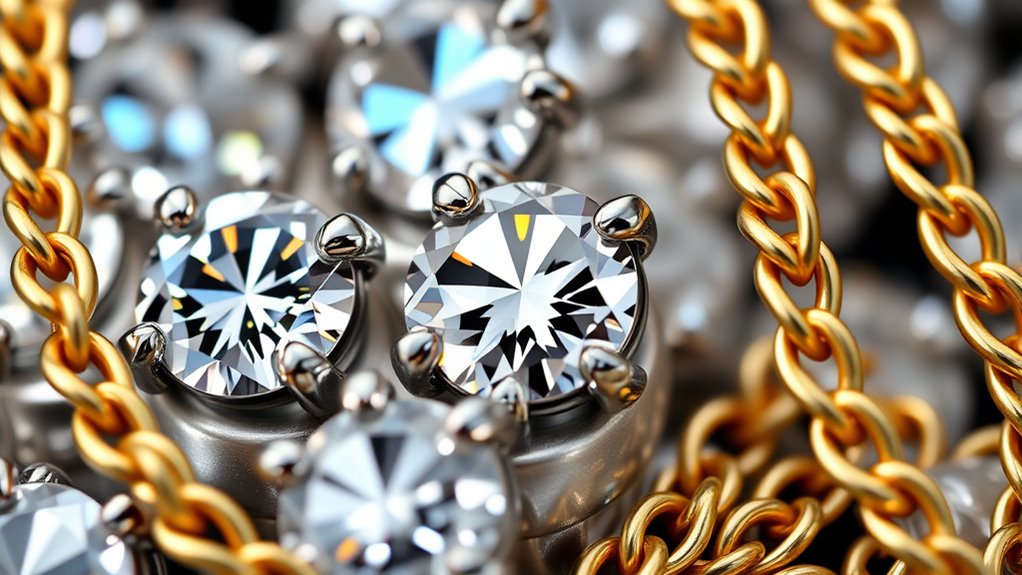
Investing in high-end jewelry can be a smart move for those seeking both beauty and financial growth, as certain pieces hold or increase their value over time. Collectible jewelry, especially limited editions or iconic designs, often appreciate well beyond their initial price. Rare diamonds and vintage pieces tend to become more desirable, boosting their market value. You might also find that jewelry with historical significance or provenance commands premium prices. furthermore, high-end jewelry offers diversification for your investment portfolio, balancing traditional assets. As demand for luxury items remains strong globally, especially among collectors and investors, the potential for appreciation increases. By choosing pieces with proven collectibility, you can enjoy both aesthetic pleasure and a valuable asset that may grow in worth.
Future Outlook for the High-End Jewelry Market

Looking ahead, the high-end jewelry market is poised for significant growth driven by increasing consumer demand, technological advances, and a shift towards sustainability. You can expect these trends to shape the future:
The high-end jewelry market is set to grow through innovation, sustainability, and changing consumer preferences.
- The market is projected to reach $450 billion by 2030, with diamond jewelry hitting $267 billion, reflecting strong growth.
- Online sales and customization will become more prevalent, making luxury jewelry more accessible and personalized.
- Younger consumers, especially Millennials and Gen Z, will prioritize ethically sourced and sustainable pieces, fueling demand for lab-grown diamonds and colored gemstones.
This evolution will make high-end jewelry more innovative, socially conscious, and aligned with modern values, ensuring a bright future for the industry.
Frequently Asked Questions
How Do Fluctuations in Gold Prices Affect High-End Jewelry Costs?
When gold prices fluctuate, you’ll notice changes in high-end jewelry costs because gold is a primary material. Rising gold prices increase manufacturing costs, pushing up retail prices for luxury pieces. Conversely, if gold prices drop, jewelry becomes more affordable, encouraging buyers. You should keep an eye on gold market trends, as they directly influence the value and pricing of high-end jewelry, impacting your purchasing decisions.
What Role Do Celebrity Endorsements Play in Luxury Jewelry Pricing?
Celebrity endorsements considerably boost luxury jewelry prices by associating brands with glamour and exclusivity. When you see a star wearing a necklace or ring, it elevates the item’s desirability, making it feel more valuable. This hype encourages you to invest more, often paying premium prices. Endorsements create a perception of status and rarity, influencing your purchasing decisions and driving up the overall market value of high-end jewelry.
Are Lab-Grown Diamonds Truly Comparable to Natural Diamonds in Value?
You might think lab-grown diamonds are just a cheap substitute, but surprisingly, they’re quite comparable in value. They share the same physical, optical, and chemical properties as natural diamonds, making them virtually indistinguishable. While natural diamonds carry centuries of rarity and tradition, lab-grown versions now offer ethical, affordable alternatives without sacrificing sparkle. So, don’t dismiss them—your next jewelry piece could be just as stunning, and more sustainable, than you think.
How Does Jewelry Customization Impact Its Market Value?
Jewelry customization markedly boosts its market value by appealing to your desire for unique, personalized pieces. When you tailor designs, materials, or engravings, you create a one-of-a-kind item that reflects your style and sentiment. This exclusivity enhances its desirability and perceived worth, often allowing sellers to command higher prices. Customization also fosters a stronger emotional connection, making the piece more valuable to you and increasing its overall market appeal.
What Are the Main Environmental Impacts of High-End Jewelry Production?
You should know that high-end jewelry production considerably impacts the environment through extensive mining, which causes habitat destruction, soil erosion, and water pollution. The energy-intensive process of extracting and processing precious metals and gemstones releases greenhouse gases, contributing to climate change. Additionally, deforestation and chemical use pose risks to ecosystems and local communities. These environmental effects highlight the importance of sustainable practices within the jewelry industry.
Conclusion
As you explore the enchanting world of high-end jewelry, remember the radiant romance of rarity, reputation, and craftsmanship. Diamonds dazzle with their divine symbolism, while gold gleams with grandeur. The market’s mesmerizing momentum mirrors your desire for distinction, driven by tradition and trend. By understanding these alluring elements, you’ll appreciate why jewelry commands such colossal prices—captivating your curiosity, craving, and commitment to craftsmanship’s timeless charm.