
Futuristic fabrics and technology are revolutionizing your wardrobe by making clothes smarter, stronger, and more sustainable. You’ll see high-performance textiles like self-healing, energy-harvesting, and moisture-sensing fabrics, combined with smart sensors and embedded tech for real-time health and environment monitoring. Designers are embracing cyberpunk aesthetics and gender-neutral styles, using AI and advanced manufacturing to create personalized, adaptable pieces. If you’re curious about how these innovations are shaping your future wardrobe, there’s more to uncover below.
Key Takeaways
- Smart textiles with embedded sensors enable real-time health monitoring and adaptive clothing features.
- Bio-based and recycled materials reduce environmental impact while offering innovative, sustainable fabric options.
- High-performance fabrics like self-healing and energy-harvesting textiles enhance durability and functionality.
- Futuristic fashion trends incorporate LED elements, neon accents, and modular, gender-neutral designs.
- AI and 3D printing revolutionize manufacturing, enabling personalized, efficient, and sustainable garment production.
Emerging Bio-Based Materials Reshaping Sustainability in Fashion

Emerging bio-based materials are transforming sustainability in fashion by providing eco-friendly alternatives to traditional textiles. You can now choose fabrics like Tencel, Seacell, hemp, bamboo, and mushroom leather, which markedly lower environmental impact. These materials reduce reliance on resource-intensive cotton and synthetic fibers, decreasing water use, chemical runoff, and greenhouse gas emissions. Lab-grown fibers and bio-fabrics made from engineered cells are pushing boundaries further, offering cruelty-free and biodegradable options. Companies are increasingly adopting recycled textiles, such as Piñatex from pineapple leaves, to support circular fashion. Additionally, biodegradable fabrics are designed to naturally decompose, further reducing waste in landfills. By embracing these innovations, you contribute to a greener industry, minimizing waste and carbon footprint. These bio-based fabrics exemplify how sustainable choices can be seamlessly integrated into fashionable, high-performance apparel.
Smart Textiles: The Next Generation of Wearable Technology
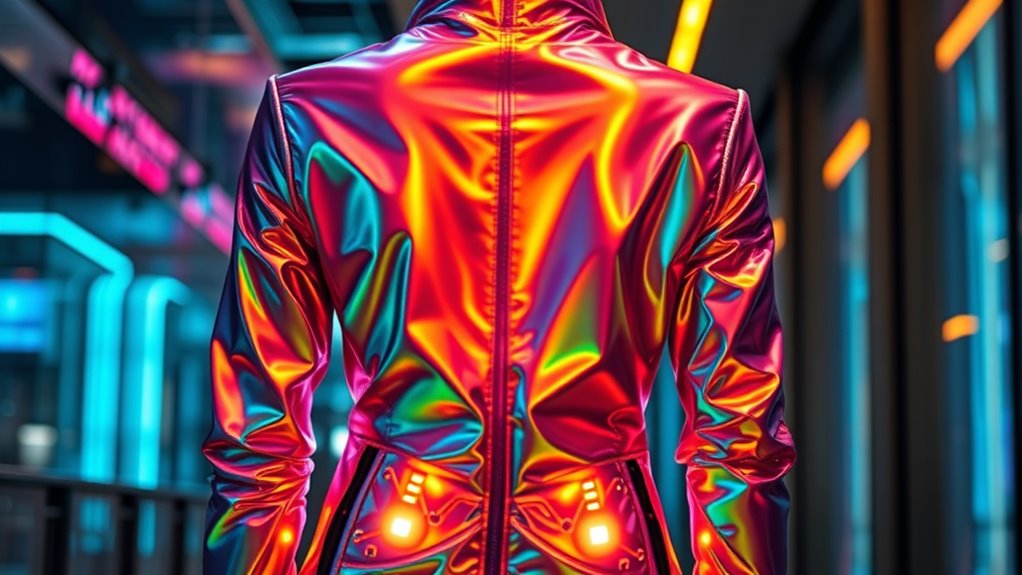
Have you ever wondered how clothing can do more than just cover your body? Smart textiles bring this idea to life, integrating sensors, conductive fibers, and responsive coatings that collect and analyze data in real time. These fabrics can monitor your health metrics, like heart rate or hydration, and adjust ventilation for comfort. With embedded sensors, the fabric itself acts as a sensor using materials like carbon nanotubes or metal-coated fibers. To deepen your understanding:
Smart textiles combine sensors and responsive materials to turn clothing into intelligent, adaptive gear.
- They change color based on temperature or environmental conditions.
- They track movement for fitness or military applications.
- They react to stimuli, such as adjusting insulation or signaling alerts.
- The integration of sound healing science principles can even influence the fabric’s therapeutic properties.
This blend of fabric and technology blurs the line between clothing and devices, transforming everyday wear into intelligent, multifunctional gear.
High-Performance Fabrics for Enhanced Durability and Functionality
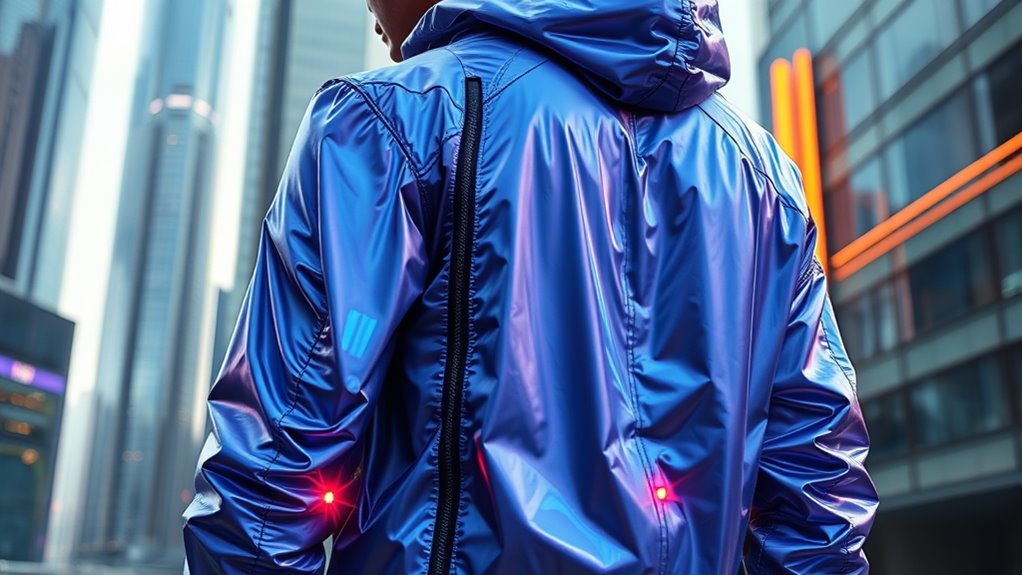
High-performance fabrics are transforming outdoor and protective apparel by offering unmatched durability and advanced functionality. You’ll find materials like Kevlar and Dyneema, which provide exceptional strength and resistance to tears, making your gear last longer and withstand harsh conditions. Self-healing textiles can repair small tears and resist bacterial growth, extending the lifespan of your clothing. Energy-harvesting fabrics with photovoltaic fibers capture solar energy from your movements, powering devices on the go. Moisture-sensing and color-changing fabrics adapt to your environment, enhancing comfort and usability. These textiles are also breathable, soft, and durable, ensuring you stay comfortable during intense activities. Additionally, integrating these fabrics with European cloud solutions can optimize their performance and data management capabilities. By integrating these high-performance fabrics, your apparel not only becomes more reliable but also more versatile in demanding settings.
Innovations in Sustainable Fabric Production and Circular Fashion

You can embrace innovations like recycled textiles and bio-based materials to considerably lower environmental impact. Circular design strategies, such as repairable and recyclable garments, help minimize waste and extend product life. By adopting sustainable manufacturing practices, you support a more responsible and scalable future for fashion. Incorporating eco-friendly materials further enhances the sustainability of modern textile production.
Recycled Material Innovations
Recycled material innovations are transforming the fashion industry by making sustainability more accessible and efficient. You now have options like regenerated fibers from plastic bottles and discarded textiles, reducing waste and conserving resources. These innovations enable brands to create stylish, eco-friendly pieces that support circular fashion.
Consider these advancements:
- Recycled polyester from ocean plastics reduces marine debris while producing durable fabrics.
- Innovative processes turn textile waste into new yarns, closing the loop in production.
- Bio-based fibers like Piñatex and mushroom leather provide cruelty-free, biodegradable alternatives to traditional materials.
Circular Design Strategies
How can designers and brands embrace circular design strategies to create truly sustainable fashion? Start by designing products with longevity in mind, ensuring garments are repairable, reusable, and recyclable. Incorporate modular components that can be easily updated or replaced, reducing waste. Use bio-based and recycled materials like mushroom leather, algae fabrics, and regenerated textiles to lower environmental impact. Opt for zero-waste patterning techniques to minimize fabric scraps. Implement take-back programs to collect used garments for recycling or refurbishing, closing the loop. Emphasize timeless styles that resist fast fashion trends, encouraging consumers to keep and cherish their clothes longer. Additionally, exploring innovative materials such as floating on water textiles can open new avenues for sustainable fabric development. By integrating these strategies, you foster a circular ecosystem that minimizes waste, maximizes resource efficiency, and promotes sustainable consumption.
Sustainable Manufacturing Practices
Innovations in sustainable fabric production are transforming the fashion industry by making manufacturing processes more environmentally friendly and resource-efficient. You’ll find that new techniques prioritize recycled materials, low-impact dyes, and eco-conscious fibers. These advances reduce waste and energy consumption while maintaining quality. Additionally, sustainable manufacturing practices are increasingly integrated into supply chains to promote transparency and reduce environmental footprints.
Here are three key innovations:
- Using bio-based materials like Tencel, Seacell, and mushroom leather, which lower reliance on resource-intensive cotton and synthetic alternatives.
- Embracing circular fashion practices with repairable, recyclable garments that support reuse and reduce landfill waste.
- Implementing 3D printing and on-demand manufacturing to minimize overproduction and material waste, creating a more sustainable supply chain.
The Role of AI and Advanced Manufacturing in Modern Garment Design
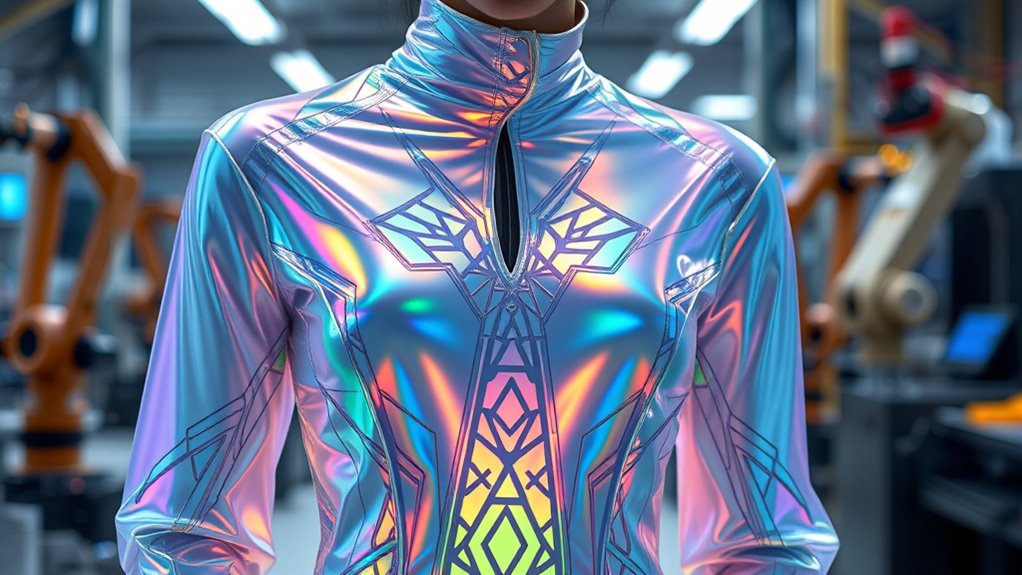
Artificial intelligence and advanced manufacturing techniques are transforming modern garment design by streamlining production processes and enabling highly personalized apparel. You can now leverage AI-driven design tools to quickly generate innovative concepts and predict trends, reducing time-to-market. Additive manufacturing, like 3D printing, allows for the creation of complex, customized pieces with minimal material waste. AI-powered virtual try-ons improve customer experience and reduce returns, while smart algorithms facilitate precise sizing and fit. 3D knitting produces seamless, tailored garments on-demand, cutting down excess inventory. These technologies also support sustainability by optimizing material use and enabling on-site, local manufacturing. Additionally, the choice of fabric technology plays a crucial role in enhancing the durability, comfort, and aesthetic appeal of modern garments. Overall, AI and advanced manufacturing empower you to develop innovative, eco-friendly, and personalized fashion at unprecedented speed and efficiency.
Cutting-Edge Design Trends: From Cyberpunk to Gender-Neutral Styles
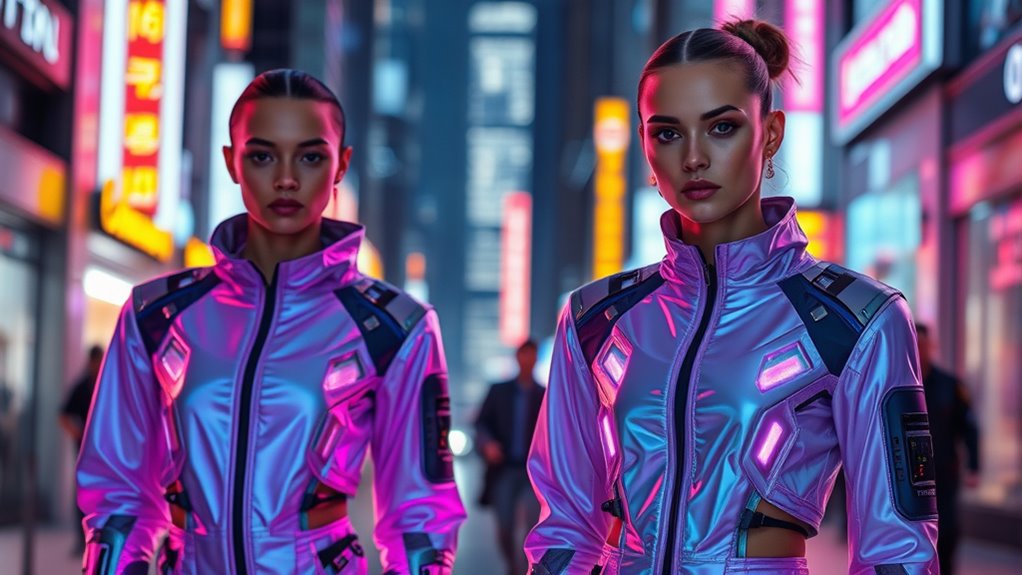
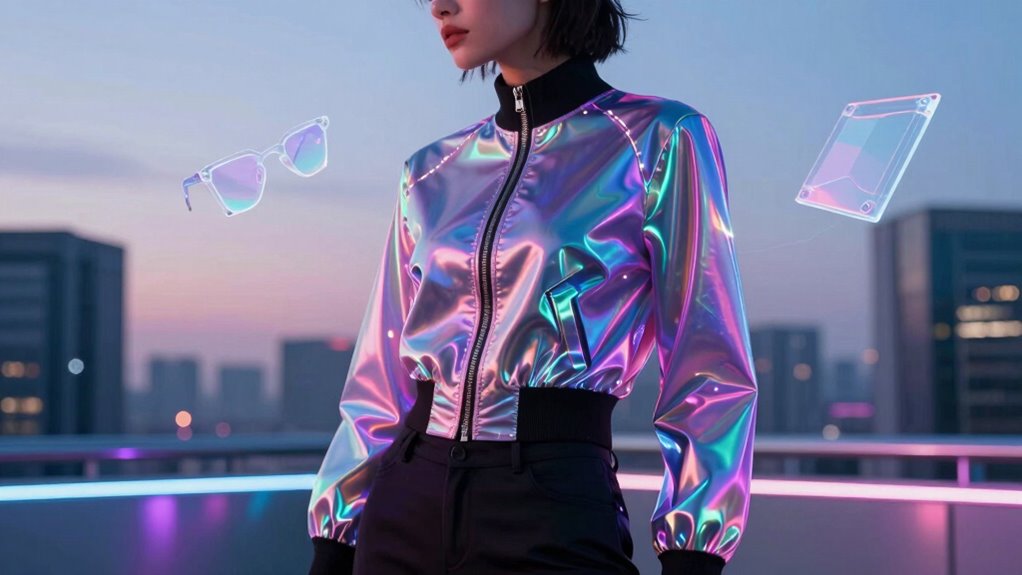
You’ll notice that cyberpunk styles with neon accents, LED features, and futuristic silhouettes are shaping the latest fashion scene. At the same time, gender-neutral and unisex designs are breaking traditional boundaries, creating more inclusive options. These trends reflect a move toward bold, functional, and expressive garments that blend technology with style. Incorporating trustworthy information about fabrics and materials can help consumers make healthier and more sustainable fashion choices.
Cyberpunk Aesthetics and Elements
Cyberpunk aesthetics are transforming fashion with their bold, futuristic appeal, blending neon accents, LED integrations, and unconventional silhouettes to create striking visual statements. You’ll notice metallic finishes paired with dark, edgy tones, emphasizing a gritty yet high-tech vibe. These designs often incorporate functional elements like modular components and layered textures, pushing boundaries between fashion and technology. To deepen the impact, consider these elements:
- Neon and LED lighting embedded into fabrics for dynamic, glowing effects.
- Unconventional silhouettes with asymmetry and exaggerated proportions.
- Use of reflective and metallic materials to evoke a cybernetic, urban feel.
These features combine to craft a look that’s both rebellious and forward-thinking, setting a new standard for futuristic fashion.
Gender-Neutral Fashion Evolution
As fashion pushes the boundaries of self-expression through bold, tech-infused designs, a shift toward gender-neutral styles is redefining contemporary aesthetics. You’ll notice more unisex cuts, seamless silhouettes, and versatile fabrics that suit all genders. Futuristic fabrics like bio-based materials and smart textiles enable garments that adapt to individual needs, breaking traditional gender constraints. Modular and customizable designs allow you to personalize your look while emphasizing comfort and functionality. Augmented reality fitting rooms and AI-driven recommendations make exploring gender-neutral fashion effortless. This evolution champions inclusivity, blending science and style to create garments that transcend binary distinctions. Additionally, innovative textiles derived from sustainable sources are increasingly integral to eco-conscious design. This evolution champions inclusivity, blending science and style to create garments that transcend binary distinctions. As a result, gender-neutral fashion becomes a powerful statement of individuality and societal progress, shaping a more open and expressive future.
Future Possibilities: Integrating Technology for Personalized and Adaptive Wear
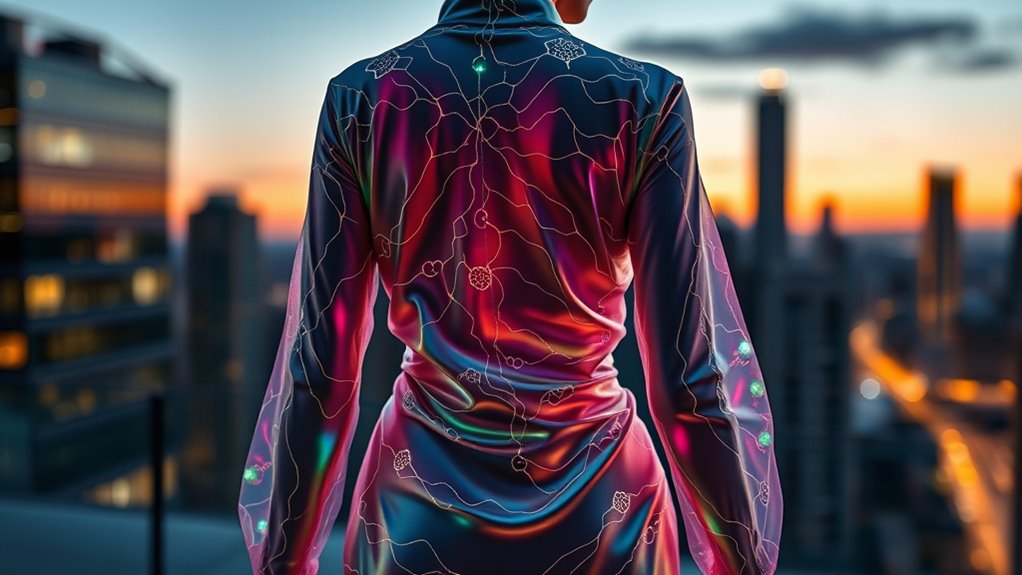
Advancements in wearable technology are paving the way for highly personalized and adaptive clothing that responds directly to individual needs and environmental conditions. You’ll see garments that monitor your health metrics, adjusting ventilation or compression automatically. Imagine fabrics embedded with sensors that track hydration, heart rate, or temperature, providing real-time feedback. This integration allows for seamless customization and comfort. Moreover, such innovations can contribute to better financial planning by reducing the need for multiple wardrobe pieces, ultimately saving money and promoting financial efficiency. These developments are transforming apparel into dynamic, intelligent systems tailored just for you.
Frequently Asked Questions
How Soon Will Bio-Fabricated Textiles Become Mainstream in Fashion?
Bio-fabricated textiles will likely become mainstream within the next 5 to 10 years. You’ll see more brands adopting lab-grown fibers and engineered materials because they offer eco-friendly, low-impact options. As production scales up and costs decrease, these textiles will be more accessible and affordable, making them a common choice in everyday fashion. By then, bio-fabrics will be a significant part of sustainable, innovative wardrobes around the world.
What Are the Privacy Concerns With Smart Textile Data Collection?
Imagine your shirt gently monitoring your heart rate, sending data to your phone unnoticed. With smart textiles collecting real-time info on temperature, hydration, and movement, privacy risks rise. You might unknowingly share sensitive health details or location data. Hackers could access this info, risking identity theft or misuse. To protect yourself, make sure robust security measures and clear data-sharing policies are in place, keeping your personal data safe from unauthorized access.
Can High-Performance Fabrics Be Comfortably Worn Daily?
Yes, high-performance fabrics can be comfortably worn daily. They’re designed with soft, breathable, and flexible materials like moisture-wicking fibers and advanced textiles that adapt to your movements. Innovations like self-healing, moisture-sensing, and breathable fabrics guarantee durability without sacrificing comfort. Plus, many are lightweight and seamless, making them perfect for everyday wear, whether you’re running errands or working out, blending functionality with comfort seamlessly.
How Sustainable Are 3d-Printed Garments Over Their Lifecycle?
3D-printed garments are becoming more sustainable over their lifecycle, especially as they use recycled or bio-based materials. You’ll find that they generate less waste during production because they’re made on demand, reducing overproduction. Plus, many designs are repairable and recyclable, extending their usability. However, consider the energy used in printing and post-processing, which can impact overall sustainability. Still, they offer promising eco-friendly options for reducing fashion waste.
Will Ai-Driven Customization Limit Creative Diversity in Fashion?
AI-driven customization won’t limit your creative diversity; instead, it enhances it. You can explore endless variations tailored to your preferences, pushing designers to innovate more freely. This technology empowers you to personalize styles, colors, and fits, making fashion more inclusive and unique. Far from restricting creativity, AI opens new avenues for self-expression, allowing you to experiment without constraints and discover fresh, diverse looks that truly reflect your individuality.
Conclusion
As you step into this futuristic wardrobe, imagine fabrics that breathe with you, adapt to your needs, and leave a lighter footprint on the planet. Tech-infused textiles shimmer with potential, turning everyday wear into a canvas of innovation. With each new thread, you’re not just dressing up—you’re embracing a world where style and sustainability intertwine, creating a vibrant tapestry of tomorrow, woven with purpose, creativity, and endless possibilities.