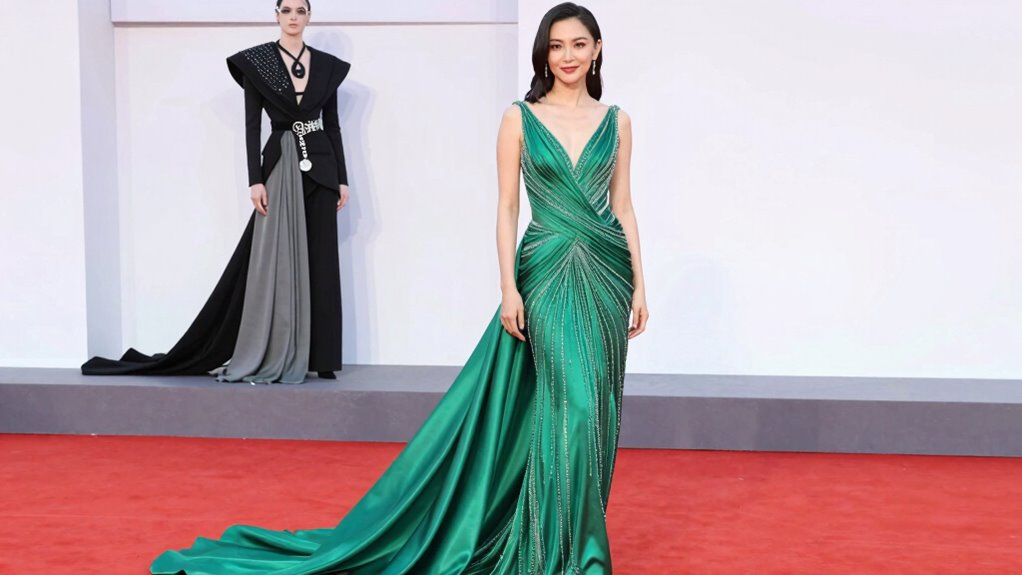
When you see celebrities in stunning outfits, know that their looks are often heavily customized rather than off-the-rack. Designers tailor garments for perfect fit, add accessories, and modify designs to suit event needs, safety, and photo requirements. Runway pieces focus on artistic expression, while red carpet looks prioritize glamour and camera-readiness. To understand why celebrity fashion isn’t just off-the-shelf, keep exploring how these designs are brought to life behind the scenes.
Key Takeaways
- Celebrities’ red carpet outfits are custom-tailored with adjustments for perfect fit and camera-ready appearance, unlike off-the-rack clothing.
- High-fashion runway pieces often use experimental materials and avant-garde designs that aren’t practical for everyday wear.
- Red carpet looks are styled with unique accessories, jewelry, and makeup, customized to enhance glamour and media appeal.
- Practical modifications like quick fixes, safety adjustments, and fabric choices ensure comfort and safety during lengthy events.
- Designer collaborations and legal restrictions prevent celebrities from wearing off-the-rack versions, requiring bespoke or modified garments.
The Differences in Design and Material Choices

Designers often create runway pieces with experimental or avant-garde materials that aren’t intended for retail, emphasizing visual impact over practicality. These designs may feature translucent fabrics, unusual textures, or structural elements that make a statement under show lighting but aren’t suitable for everyday wear. The materials used are often lightweight or unfinished, allowing for quick adjustments and theatrical effects. In contrast, red carpet garments are crafted with luxurious, durable fabrics like silk, satin, or velvet to ensure a glamorous appearance and longevity throughout the event. They undergo additional finishing, with reinforced seams and carefully selected trims, so they look impeccable in photos and can withstand extended wear. This deliberate choice of materials highlights the difference between a show-stopping runway look and a polished, practical celebrity outfit. European cloud innovation contributes to sustainable fashion by enabling designers to explore new, eco-friendly materials and manufacturing processes.
Tailoring and Fit Adjustments for Celebrities
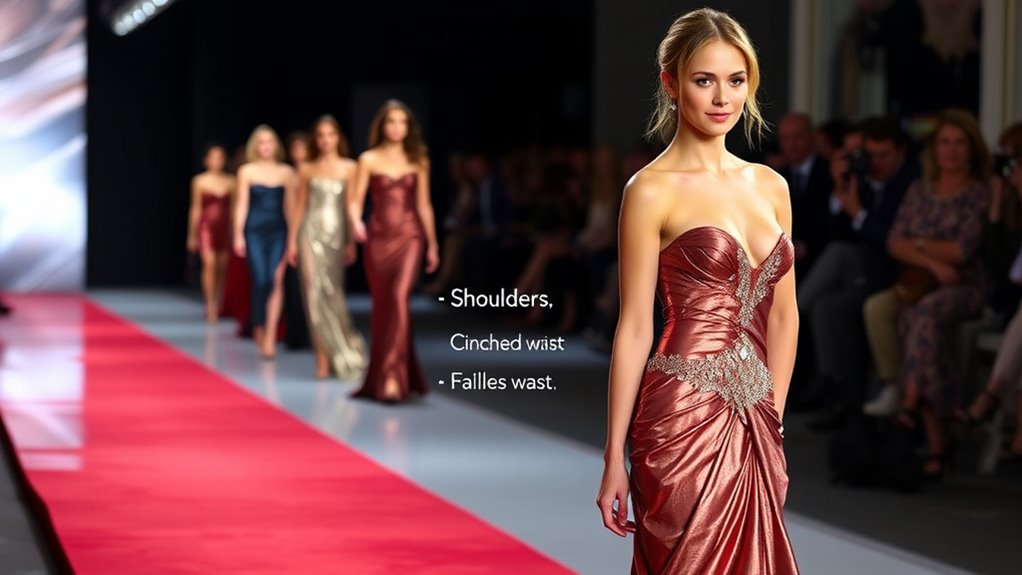
You’ll notice that celebrities often get custom pattern alterations to guarantee their outfits fit perfectly on camera and during movement. Shapewear and padding are commonly added to sculpt their silhouettes, making each look more polished. When last-minute issues arise, quick fixes like tape or clips are used backstage to keep everything in place and looking flawless. Additionally, some celebs incorporate waterproof fabrics to ensure their ensembles remain pristine despite sweating or unexpected spills.
Custom Pattern Alterations
To guarantee a red carpet gown fits perfectly and flatters the celebrity’s body, extensive pattern alterations are often necessary. You’ll work closely with designers or tailors to modify the original pattern, adjusting darts, seams, and panel placements for a flawless silhouette. These changes address the unique proportions and curves of the celebrity, ensuring comfort and camera-ready precision. You might also add custom panels or reshape neckline and sleeve lines for a more flattering fit. Pattern alterations help achieve symmetry, eliminate gaping, and enhance mobility while maintaining the garment’s visual impact. Unlike off-the-rack pieces, these tailored adjustments allow the gown to mold seamlessly to the body, creating a sculpted look that stands out under flashing lights and in photos. For those seeking a touch of modern edge, incorporating elements like custom pattern alterations can elevate the overall design and ensure a perfect fit.
Use of Shapewear and Padding
Because red carpet moments demand a flawless and sculpted silhouette, celebrities often rely on shapewear and padding to achieve the desired body shape. Shapewear smooths out curves, creating a sleek foundation under fitted gowns, while padding enhances or exaggerates certain areas, like hips or bust. These tools help celebrities attain a camera-ready, proportioned look that differs from their everyday body. Tailoring is also key; seams and darts are adjusted to accommodate added padding and ensure the garment contours perfectly to the body. Unlike runway models, who don garments as designed, celebrities customize their outfits with these underlayers for a more dramatic, polished effect. This combination of shapewear, padding, and meticulous tailoring ensures their appearance is both stunning and secure during long, high-pressure events. Additionally, body shaping techniques play a significant role in refining their overall look, allowing for more control over their silhouette in front of the camera.
Quick On-Set Fixes
On-set quick fixes are a vital part of ensuring a celebrity’s look remains flawless throughout an event. As you watch, stylists use tape, clips, and safety pins to adjust fit issues instantly. They may hem or pin the gown temporarily to prevent tripping or wardrobe malfunctions. Backstage, they often tighten or loosen seams for better comfort and movement. Sometimes, they add discreet underpinnings or padding to perfect the silhouette under camera lights. In high-pressure moments, quick fixes like repositioning a strap or smoothing fabric make all the difference. These on-the-fly adjustments help maintain a polished appearance, ensuring the outfit looks impeccable on camera and in photos. It’s a fast-paced process that keeps the focus on glamour without compromising safety or style. Additionally, understanding color accuracy and proper fit can significantly enhance the visual impact of a look under different lighting conditions.
Styling and Accessory Customization
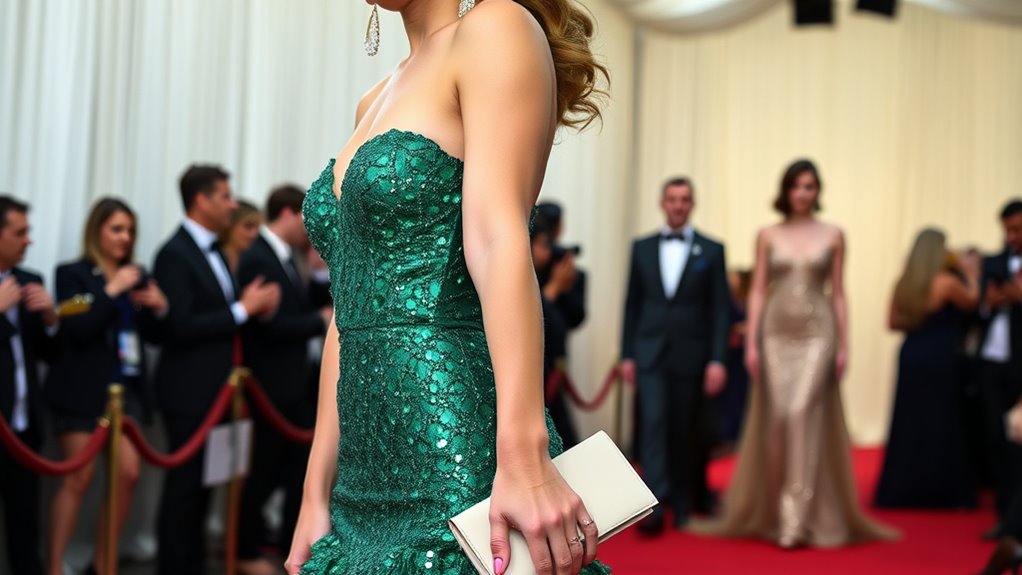
Styling and accessory customization play a crucial role in transforming a designer’s runway piece into a memorable red carpet look. You personalize outfits with jewelry, shoes, and hair to elevate the overall impact. Stylists often add bespoke touches—like statement earrings or custom clutches—that aren’t part of the original design. This creates a unique narrative tailored to the event and celebrity’s brand. Accessories are often modified for safety, comfort, or camera angles, changing the original look. Here’s how these elements differ: Free Floating
The Impact of Media and Audience Expectations
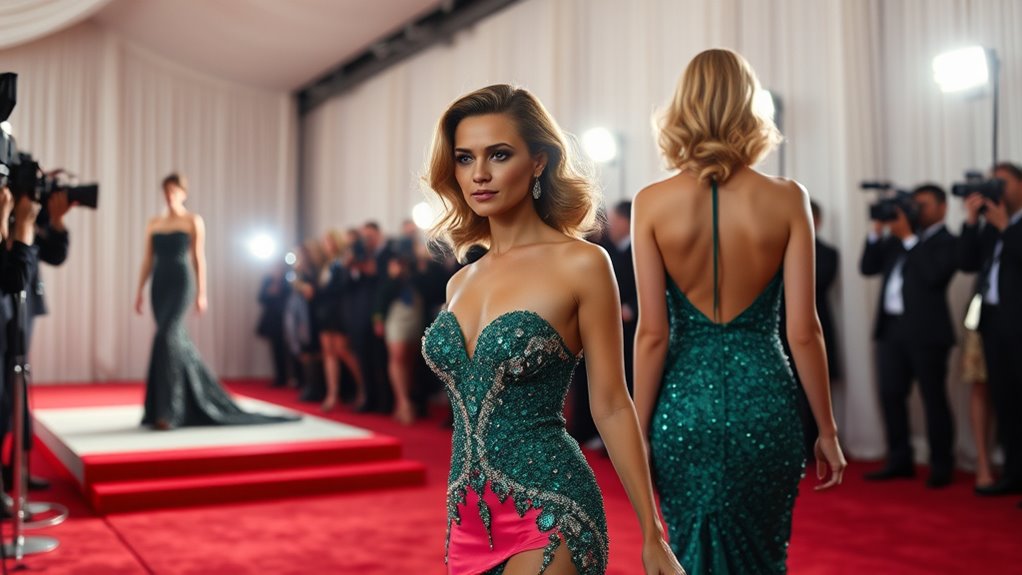
You notice how media and audience expectations shape what looks good on the red carpet. Camera-ready styling choices focus on bold silhouettes and polished details that read well in photos and videos. Because of this, designers and celebrities prioritize visual impact over runway experimentation, knowing every detail will be scrutinized. Additionally, AI-powered virtual reality tools influence styling decisions, enabling brands to preview how outfits appear in various settings before final choices are made.
Camera-Ready Styling Choices
Media and audience expectations heavily influence camera-ready styling choices, as every detail must translate well through the lens. You find that designers and stylists select fabrics, cuts, and embellishments that look stunning in photos and videos. Seams are reinforced, fabrics are chosen for opacity and texture, and accessories are carefully curated to prevent distractions. Small details like jewelry, nail color, and hair are meticulously planned to enhance the overall impact. You notice that makeup is tailored to withstand close-up scrutiny and lighting, ensuring the model’s face remains flawless. Quick fixes—taping, pinning, or adjusting garments—happen backstage to maintain a polished appearance. Ultimately, every styling decision aims to create a picture-perfect look that captures attention, elevates the celebrity’s image, and aligns with media demands. Additionally, understanding ventilation considerations helps ensure comfort and safety during long shoots or wardrobe changes.
Audience’s Visual Expectations
Audience expectations shape how red carpet looks are crafted and perceived, driven by the media’s portrayal and public appetite for glamour. You expect celebrities to shine, dazzle, and appear flawless, which influences designers to create show-stopping outfits tailored for those moments. To meet these expectations, you should consider:
- The need for bold silhouettes and striking details that photograph well from all angles.
- The importance of polished finishes, luxurious embellishments, and perfect fit for camera close-ups.
- The desire for looks that tell a story or evoke emotion, aligning with the event’s theme or celebrity’s brand.
- The use of rendering techniques and high-quality materials to ensure garments look flawless under intense lighting and on camera.
These factors push designers and stylists to prioritize visual impact over everyday practicality, ensuring that every detail captures your attention and fits your glamorous image.
Media’s Detail Amplification
Media plays a crucial role in amplifying every detail of red carpet looks, transforming subtle design choices into striking visual statements. You’ll notice that close-up shots, lighting, and camera angles highlight intricate embroidery, embellishments, and fabric textures that might go unnoticed on the runway. Stylists and photographers fine-tune how outfits appear, often adding or removing accessories to enhance visual impact. Small details like jewelry, hair, and makeup are scrutinized and emphasized to tell a story or convey glamour. Audience expectations drive this amplification—what looks stunning in person may be edited or adjusted for the camera. This heightened focus ensures every element aligns with narrative goals, making the look memorable, polished, and perfectly suited for publicity or brand promotion.
Licensing, Branding, and Commercial Constraints

Licensing, branding, and commercial constraints play a pivotal role in shaping how runway designs are adapted for red carpet appearances. You’ll find that not all runway pieces can be worn exactly as shown due to licensing agreements, exclusivity clauses, and brand strategies. These factors often lead to modifications or substitutions, ensuring legal compliance and brand consistency.
- Some runway designs aren’t cleared for celebrity use because of exclusivity or licensing limitations.
- Retail versions are simplified versions of couture, often tailored for mass production rather than high-profile events.
- Brand collaborations and sponsorship agreements can require logo placements or specific silhouettes, which may differ from the original runway concept.
These constraints shape what you see on the red carpet, balancing creativity with legal and commercial realities.
Practical Modifications for Safety and Comfort
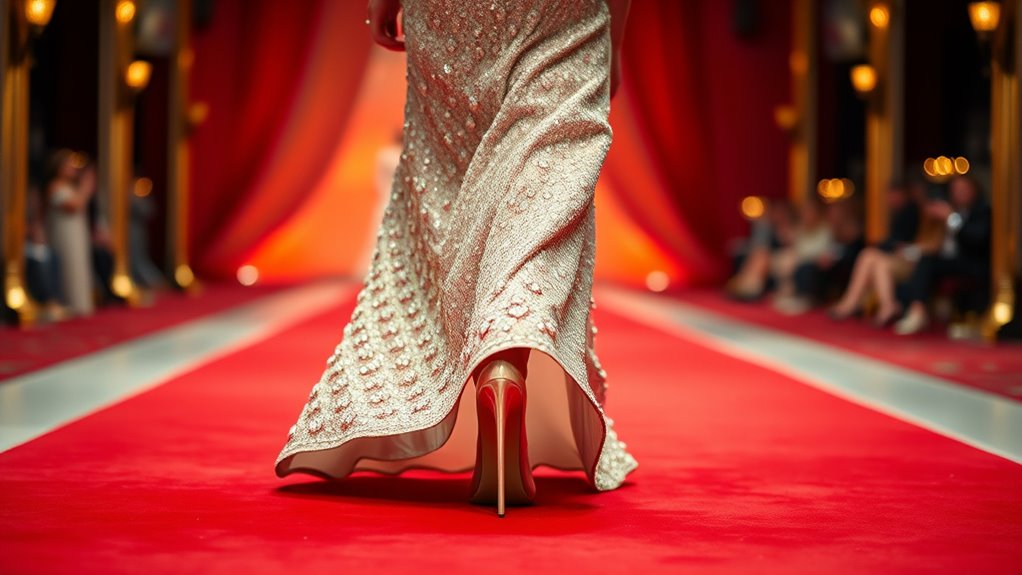
Red carpet events demand more than just stunning visuals; they require garments to be practical and safe for extended wear and movement. You might notice modifications like shorter trains, discreet zippers, or reinforced seams to prevent accidents or wardrobe malfunctions. Safety concerns, such as fragile beading or flammable trims, lead to reinforcement or removal of delicate details. Fabrics are often chosen for comfort and climate suitability, with breathable linings or lighter weights added to ensure you stay comfortable throughout long events. Quick fixes like tape, clips, or temporary hems are common backstage to address last-minute issues. These practical adjustments help you move confidently, avoid mishaps, and stay comfortable, ensuring that your outfit functions as beautifully as it looks, all while prioritizing your safety. Additionally, navigation and mapping considerations can help designers and stylists plan for seamless dressing and troubleshooting during high-profile appearances.
The Role of Runway Vs Red Carpet Presentation Goals

Runway and red carpet presentations serve distinct purposes that shape how garments are designed and showcased. Runway shows focus on highlighting a designer’s concept, setting trends, and creating visual impact for industry insiders. They prioritize innovation, artistic expression, and overall collection coherence. In contrast, red carpet appearances aim to present celebrities in a way that emphasizes glamour, brand storytelling, and photo-readiness. The goal is to capture attention, convey status, and align with current trends.
- Runway emphasizes artistic vision and trend-setting, often with experimental silhouettes.
- Red carpet prioritizes glamour, body sculpting, and visual clarity on camera.
- Both adapt garments to meet their specific audience, environment, and promotional objectives.
From Concept to Celebrity: The Path of a Fashion Piece
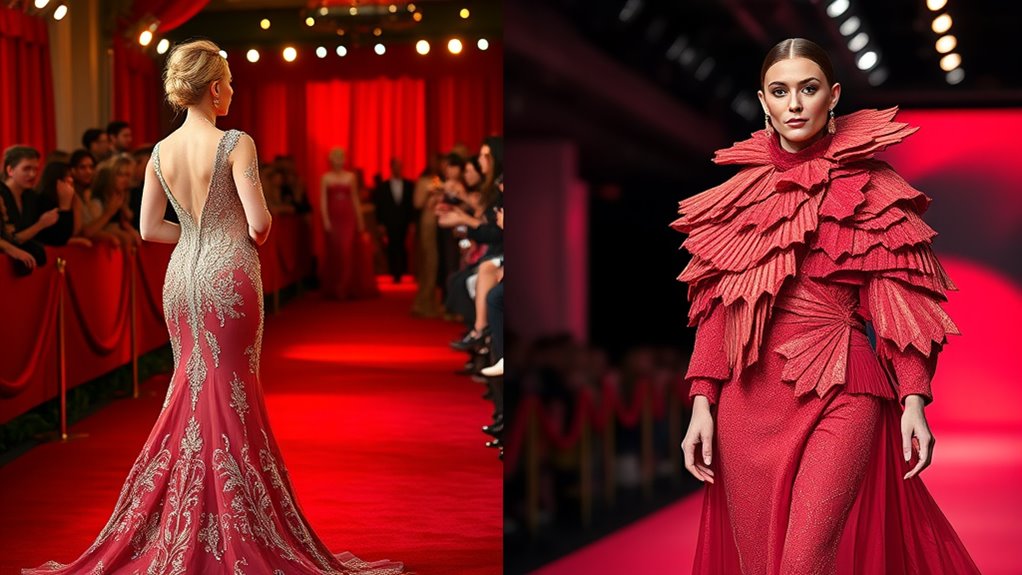
The journey of a fashion piece from initial concept to celebrity appearance involves multiple stages of transformation. You start with a designer’s vision, creating a concept that captures trends and brand identity. From there, sketches and prototypes bring that idea to life, often as one-of-a-kind samples or custom designs. These initial pieces undergo detailed fittings, tailoring, and structural adjustments to ensure they look flawless on a model. When it’s time for a celebrity to wear the piece, further modifications happen—reinforcements, custom closures, and safety tweaks—to suit movement and event demands. Accessories, styling, and finishing touches are added to create a striking red carpet look. Throughout this process, practical considerations like durability, fit, and visual impact shape the final garment that makes its debut on a celebrity.
Frequently Asked Questions
How Do Designers Ensure Red Carpet Garments Are Durable Enough for Extended Wear?
Designers guarantee red carpet garments are durable enough for extended wear by adding custom reinforcements, such as stronger seams, linings, and boning, and using high-quality, resilient fabrics. They also incorporate sturdy closures and secure embellishments. Careful tailoring ensures the fit stays intact throughout the event. Stylists might make quick fixes backstage, like taping or clipping, to address any last-minute durability concerns, ensuring the outfit stays flawless all night.
What Are Common Last-Minute Fixes Stylists Perform Backstage Before a Red Carpet Event?
Backstage, you quickly perform last-minute fixes that contrast the garment’s initial perfection with the chaos of the event. You might secure loose beads, adjust uneven hems, or tighten straps to prevent wardrobe malfunctions. Sometimes, you add discreet clips or tape to keep everything in place. These small, immediate interventions guarantee the look remains flawless under camera flashes and public scrutiny, transforming last-minute tweaks into polished, picture-ready ensembles.
How Do Licensing Restrictions Influence a Celebrity’s Outfit Choices Compared to Runway Designs?
Licensing restrictions limit your outfit choices by preventing you from wearing certain runway designs. You might have to opt for authorized replicas, modified versions, or alternative pieces that comply with licensing agreements. This means your look could differ from the original runway creation, ensuring legal use while still showcasing the designer’s aesthetic. These restrictions help protect intellectual property but also influence the variety and authenticity of your red carpet ensemble.
In What Ways Do Climate and Venue Conditions Alter the Final Red Carpet Look?
You’re affected by climate and venue conditions when choosing a red carpet look. You adjust fabrics for heat or cold, opting for breathable or insulating materials. You modify designs for indoor or outdoor settings, ensuring comfort and safety. You consider lighting and background, choosing colors and textures that pop or blend. You tailor your outfit for mobility, safety, and style, making sure it looks stunning and feels comfortable, no matter the environment.
How Much Do Accessories and Styling Choices Change the Original Designer Concept?
Accessories and styling choices often markedly alter the original designer concept. You might add statement jewelry, bold shoes, or dramatic hair and makeup to create a signature look that’s more personal and suited to the event. These choices can emphasize or downplay certain design elements, transforming a runway piece into a red carpet moment. Stylist tweaks also enhance camera appeal, ensuring the outfit aligns with the celebrity’s brand and the event’s vibe.
Conclusion
So, next time you see a celebrity’s stunning look, remember it’s often more than just off-the-rack glamour. It’s a blend of custom tailoring, strategic styling, and behind-the-scenes tweaks—sometimes inspired by a chance meeting or sudden inspiration. That flawless dress? It might just be a coincidence of design and timing, reminding you that behind every red carpet moment, there’s a story of artistry and adaptation you rarely see.